
Communication in a Relationship: How Words Shape Where Your Relationship Is Headed
5 min read
In short: Communication in a relationship isn't just about agreeing on what to buy at the grocery store. It plays a major role in whether you feel safe and understood with each other. Relationships usually don't fall apart because of one big argument, but because of hundreds of small sentences that leave one partner feeling misunderstood. The good news? This can change. Sometimes, saying the same thing in different words can make all the difference.
Why Is Communication So Important in a Relationship?
Every sentence carries two messages: what you're saying and what you're implying about the other person.
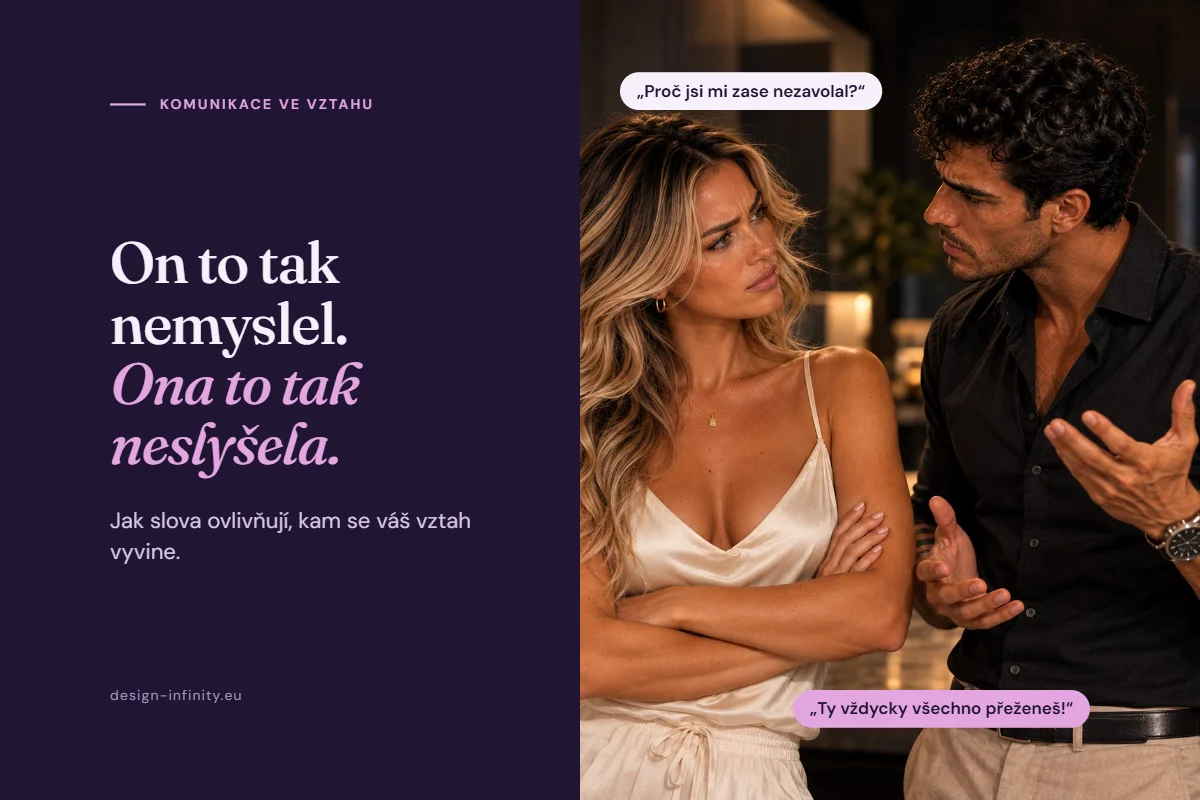
“Once again, you forgot to buy milk” doesn't just say that there is no milk at home. It can also sound like: “You're unreliable.” And that's often the part your partner reacts to.
That's why couples often argue about seemingly insignificant things. It's not really about the milk, the dishes, or coming home late. It's about feeling like the other person isn't listening, doesn't take you seriously, or is constantly criticizing you.
When communication works, conflicts can actually strengthen a relationship because partners get to understand each other better. When it doesn't, every argument leaves a small scar, and over time, people may stop opening up to each other.
How Does Communication Change Throughout a Relationship?
Dating: Trying to Read the Signals
At the beginning, it's easy to overthink what the other person meant.
Why did they take three hours to reply? What does that emoji mean? Instead of communicating openly, we start analyzing messages and filling in the blanks ourselves.
The healthiest approach is to pay attention to how the other person behaves over time and simply say what you want.
That's exactly what our e-books Stop Analyzing Him for women and Stop Trying to Decode Her for men are about. They approach relationships from different perspectives, but the message is the same: stop trying to decode everything and start asking questions.
The Beginning of a Relationship: Setting the Pattern
During the first few months, couples develop patterns that can last for years.
How do you tell each other that something bothers you? Do you talk about it right away, or do you swallow it? Do you say “I'm fine” when you're actually not?
What you learn to do at this stage often becomes the default pattern of your relationship.
Living Together: Everyday Friction
Once you share a home, there are more situations that can create tension: cleaning, money, time with family, tiredness and everyday responsibilities.
This is when phrases like “You never…” or “Why do you always…” tend to appear most often.
They aren't necessarily meant to hurt, but they automatically put the other person on the defensive.
Long-Term Relationships: Silence or Closeness
After years together, couples often fall roughly into two groups.
Some become more and more open with each other. Others mainly talk about logistics: who will pick up the kids, what needs to be bought and what time they'll be home.
The difference isn't necessarily about how much they love each other. It often comes down to whether they've learned how to have difficult conversations without hurting one another.
5 Phrases That Can Damage a Relationship Most — and What to Say Instead
Most people don't say these things with bad intentions. Yet they can quickly turn a conversation into an argument.
1. “Why did you do that?”
It can sound like an interrogation, which often makes the other person defensive.
Try:
“What happened that made things turn out this way?”
2. “You never…” / “You always…”
One situation suddenly becomes an accusation covering the entire relationship. The other person then starts looking for exceptions instead of addressing the actual problem.
Try:
“Today I was hurt when…”
3. “You're right, but…”
The word “but” can erase everything that came before it.
Try:
“You're right. And at the same time, I need…”
4. “You don't listen to me at all.”
A sentence that starts with “you” can easily feel like an attack.
Try:
“I feel like what I'm saying isn't getting through to you. Can I try saying it again?”
5. “Nothing's wrong.”
The other person will either believe you and be surprised later, or start trying to guess what's actually going on.
Try:
“Something is bothering me, but I need a little time before I can talk about it.”
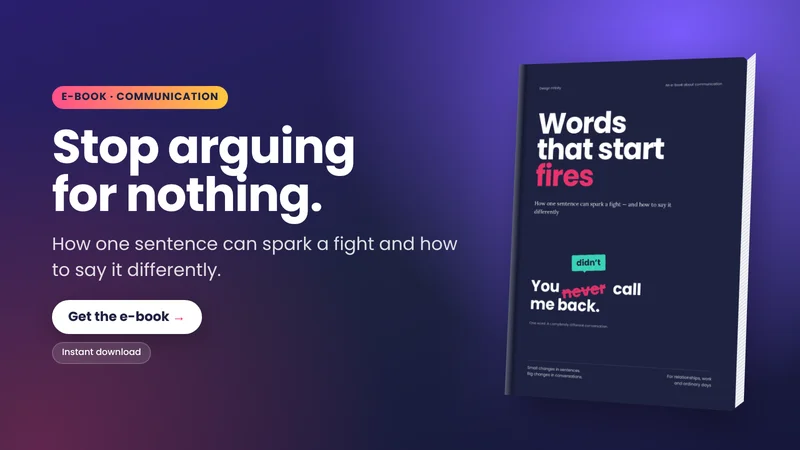
You'll find dozens of other examples like these in our e-book Words That Turn Conversations Into Hell. Each one includes the original phrase, a better alternative, and an explanation of what the other person may actually hear — and how they are likely to respond.
What Does Psychology Say About Communication Between Couples?
American psychologist John Gottman has spent decades studying why some couples stay together while others don't.
He identified four patterns of behavior that can be particularly damaging to relationships: criticism (attacking the person instead of addressing the behavior), contempt (sarcasm, ridicule or eye-rolling), defensiveness (refusing to take any responsibility) and stonewalling (withdrawing from the conversation).
He also found that the way a conversation begins can strongly influence how it develops. When a conversation starts with an attack, it is much more likely to end badly. When it starts calmly, there is a much better chance of reaching an agreement.
Repair attempts are important too — a joke, a touch, or simply saying “I'm sorry, I went too far.”
Couples who are able to make and accept these attempts tend to handle conflict more effectively.
How to Start Communicating Better Today
Talk about yourself, not about the other person.
Say “I'm hurt” instead of “You're…”Deal with one issue at a time.
Don't bring up everything that has built up over the past year.Ask instead of guessing.
“What did you mean by that?” can save you hours of overthinking.Slow down when you're angry.
Taking a break and saying, “Let's come back to this in an hour,” is okay — as long as you actually do come back to it.Notice the good things.
Appreciation and gratitude can make a relationship more resilient when conflicts happen.
Frequently Asked Questions
How can I improve communication in my relationship?
Start with specific phrases.
Replace “why” with “what happened,” “you always” with a description of one specific situation, and “but” with “and at the same time.”
Small changes in wording can have a significant effect on how the other person responds.
Why do my partner and I keep arguing about little things?
Because the argument usually isn't really about the little thing.
It's about the feeling that the other person doesn't take you seriously. Once you identify that feeling, the original issue often becomes much less important.
Can poor communication destroy a relationship?
Over time, yes.
Not because of one argument, but because of a repeated pattern of criticism, defensiveness and silence that can eventually make partners stop opening up to each other.
How do I talk to a partner who doesn't communicate?
Don't pressure or interrogate them.
Tell them what you need and give them some space:
“We don't have to talk about it right now, but it matters to me.”
If the silence continues for a long time, couples therapy may be helpful.
When should we seek professional help?
Consider seeking professional help when the same arguments keep repeating, when one of you is afraid to speak openly, or when humiliation or controlling behavior becomes part of the relationship.
If you are in immediate danger, call 112 or the Bílý kruh bezpečí helpline at 116 006.
Want to Go Deeper?
📘 Words That Starts Fire – 84 pages of phrases that fuel arguments and how to say them differently. For relationships, family and work. Includes a one-page quick-reference guide. → Get the e-book
💬 Stop Analyzing Him – for women who want to stop overthinking every message and start trusting what they actually see. 249 CZK → Get the e-book
💬 Stop Trying to Decode Her – for men who want to stop guessing what her signals mean and start communicating openly. 249 CZK → Get the e-book
🎁 Both e-books bundle – read his perspective and hers. 399 CZK instead of 498 CZK → Get the bundle
Find all our e-books here: E-books
This article is intended for inspiration and does not replace professional psychological help.